
Menopause Is a Whole Body Shift: The Holistic Approach Every Woman Should Know
- Mar 5
- 3 min read
She leaned forward and lowered her voice.
“I feel like my body is betraying me.”
Her sleep was fractured. Her weight had shifted. Her patience was thin. She was doing everything she had always done, and suddenly it no longer worked.
What she was describing was not failure.
It was physiology.
Menopause is not a random collection of symptoms. It is a whole body shift. Estrogen receptors exist in the brain, heart, bones, muscle, bladder, and gut. When levels decline, the effects ripple across every system.
A menopause holistic approach means understanding that interconnectedness and responding with intention.

Brain, Hot Flashes, and Sleep
Hot flashes and night sweats are disruptive. They interrupt sleep, meetings, workouts, and confidence.
As estrogen declines, the brain’s temperature regulation becomes more sensitive. Small internal shifts can trigger intense heat and sweating. These are called vasomotor symptoms.
Sleep disruption affects more than energy. It influences cortisol regulation, insulin sensitivity, appetite hormones (ghrelin and leptin), mood stability, and cognitive clarity.
This is also a smart time to check what I call the “ABC” markers:
A1C or blood sugar
Blood pressure
Cholesterol, particularly LDL
Menopause is natural. Preventive medicine during menopause is strategic.
Hormone therapy remains the most effective treatment for hot flashes when appropriate and individualized. Non-hormonal options exist as well. Alcohol moderation may reduce symptoms and lower long-term cancer risk. Protecting sleep is foundational.
Muscle and Bone Health
Estrogen decline accelerates muscle loss and bone resorption. The first five to seven years after menopause can bring accelerated bone loss if we are not proactive.
Walking supports general health, but it is usually not enough to preserve bone density.
A holistic approach includes:
Progressive resistance training
Weight-bearing exercise
Protein at every meal
Vitamin D sufficiency
Screening when appropriate
Muscle is active tissue. It supports glucose regulation and helps maintain metabolic health, even at rest.
Midlife is not the time to shrink your workouts. It is the time to train with intention. Check out some of my favourite resources by Osteoporosis Canada called "Too Fit To Fracture." There is an emphasis on both strength training and balance training.
Metabolic and Cardiovascular Health
As estrogen declines, many women notice weight shifting toward the midsection. This deeper abdominal fat, called visceral fat, surrounds internal organs and is more metabolically active.
This is physiologic. It is not a moral failure.
Foundational strategies include:
Resistance training
Approximately 25 grams of fiber daily
Protein at each meal
Mediterranean-style eating
Monitoring lipids and glucose
Small consistent changes compound.
Gut Health
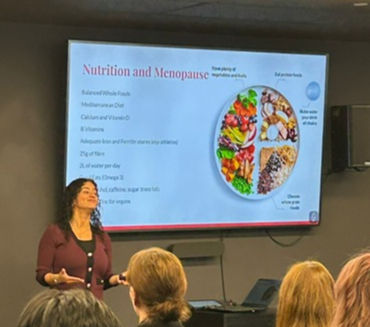
Estrogen influences the gut microbiome, and certain gut bacteria participate in estrogen metabolism.
Fiber diversity supports metabolic and inflammatory balance. One tablespoon of chia seeds in overnight oats is a simple place to start.
Sustainable habits outperform extremes.
Genitourinary and Pelvic Health
Genitourinary Syndrome of Menopause is common and under-discussed.
Symptoms may include vaginal dryness, urinary urgency, or discomfort.
Local vaginal estrogen is low dose and highly effective for many women. Pelvic floor physiotherapy can be transformative.
Whole-body care includes pelvic health.
Hormone Therapy in Context
Hormone therapy remains the most effective treatment for hot flashes and supports bone health when appropriately prescribed.
Timing matters. For many women, starting within ten years of menopause onset and before the age of 60 provides a favorable benefit-risk profile.
Early menopause before age 45 and Primary Ovarian Insufficiency before age 40 are associated with increased cardiovascular and bone risks. Timely medical evaluation is important.
Menopause is not something to brace against. It is something to understand and navigate strategically.
FAQ

What is a menopause holistic approach?
An approach that considers brain, cardiovascular, muscle, bone, gut, and hormonal systems together.
How much fiber do women need?
Most adult women benefit from approximately 25 grams daily from diverse sources. Hint-eat the rainbow.
Is strength training necessary?
Yes. It protects bone, metabolic health, and long-term independence.


Comments